

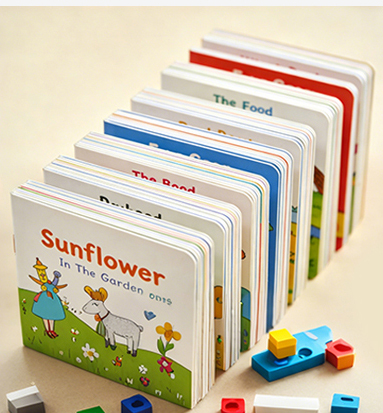
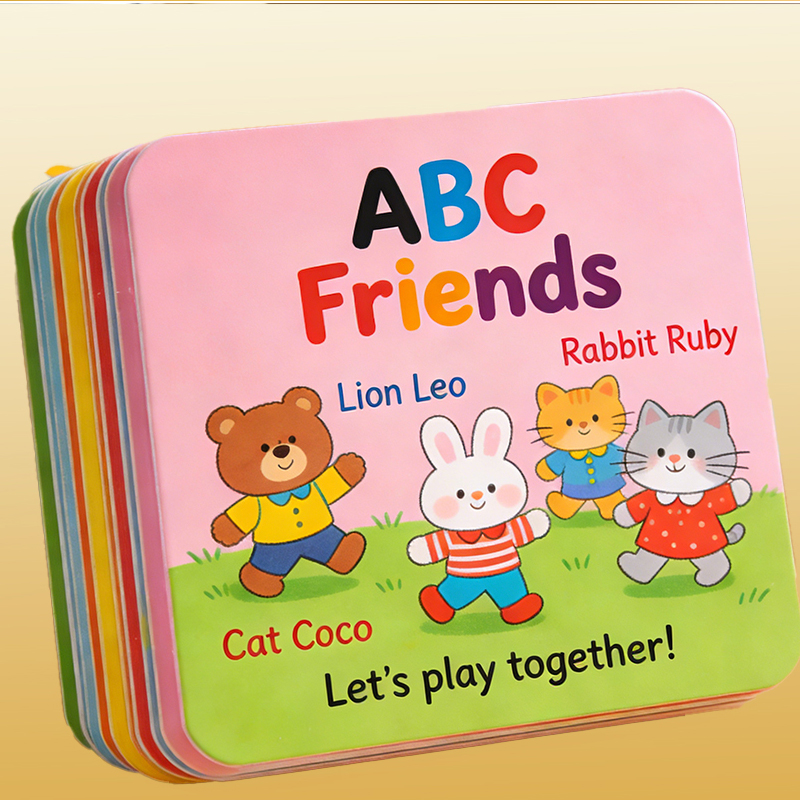
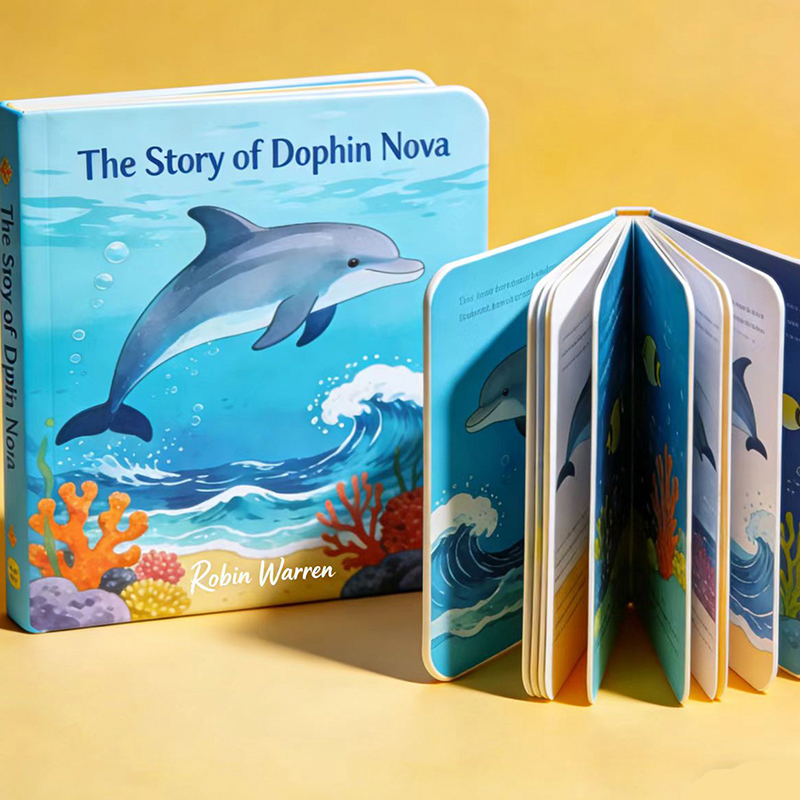
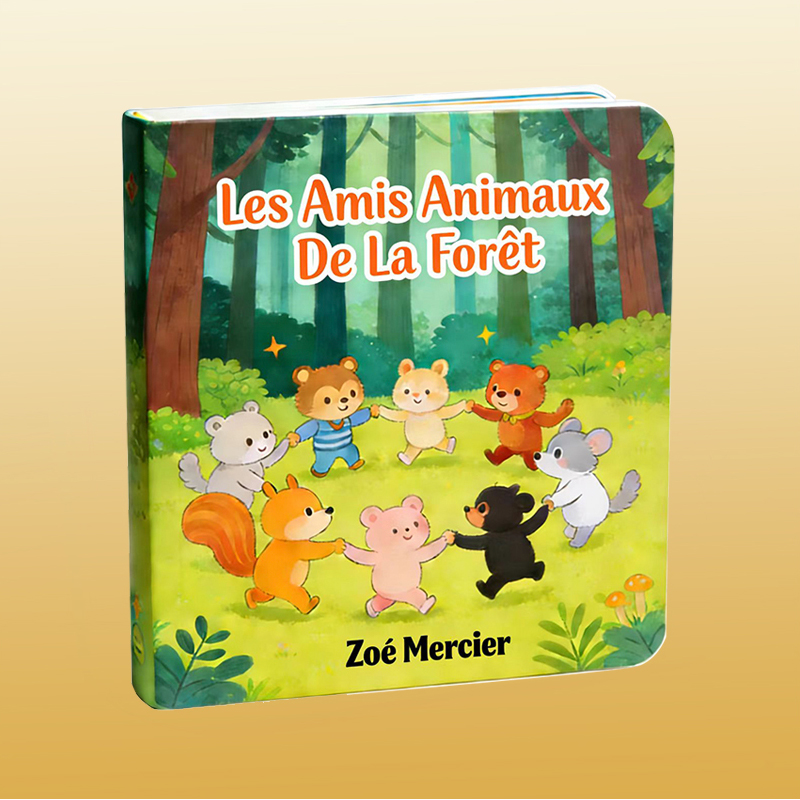

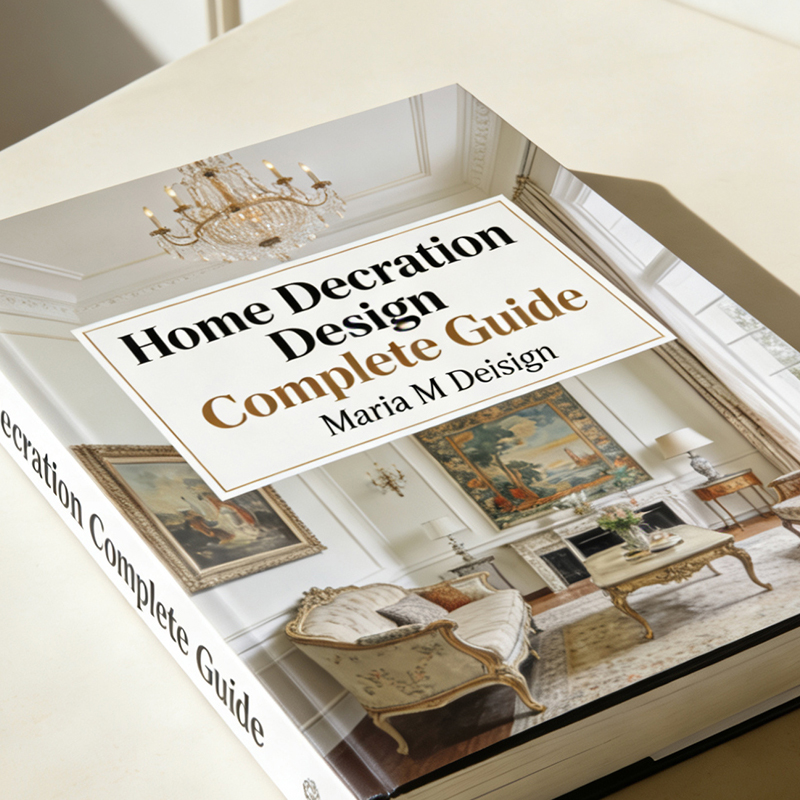
Hardcover
-
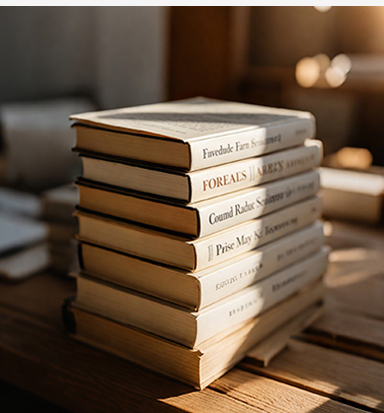
Cover: The cover of a hardcover book is made of cardboard wrapped in paper, fabric, or leather, typically with a thickness from 1mm ~ 3mm.
-
Spine: Options between square spine or rounded spine.
-
Endsheets: Used to attach the cover to the text block, usually consisting of 8 pages, commonly made of 120gsm or 140gsm uncoated paper.
-
Text Block: The main text of the book, a variety of paper types can be chosen based on specific requirements.
-
Headbands: These are adhered to the top and bottom ends of the hardcover book block, serving as fabric reinforcements that seal the ends of the spine; colors can be selected.
-
Ribbon: A bookmark ribbon, with optional colors.
- Binding: Smyth-sewn binding is the most common binding method for hardcover books, which is both beautiful and sturdy. It should be noted that this binding method requires the number of pages to be a multiple of 4.
- Process: Multiple special processes can be selected, such as foil stamping, spot UV, embossing/debossing, matte/glossy lamination, etc.
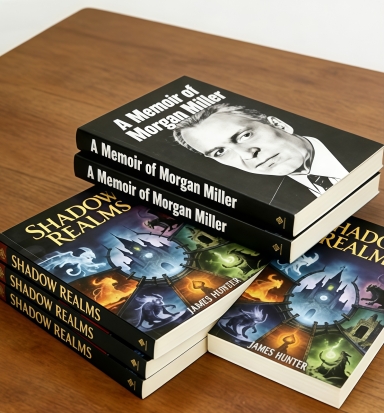
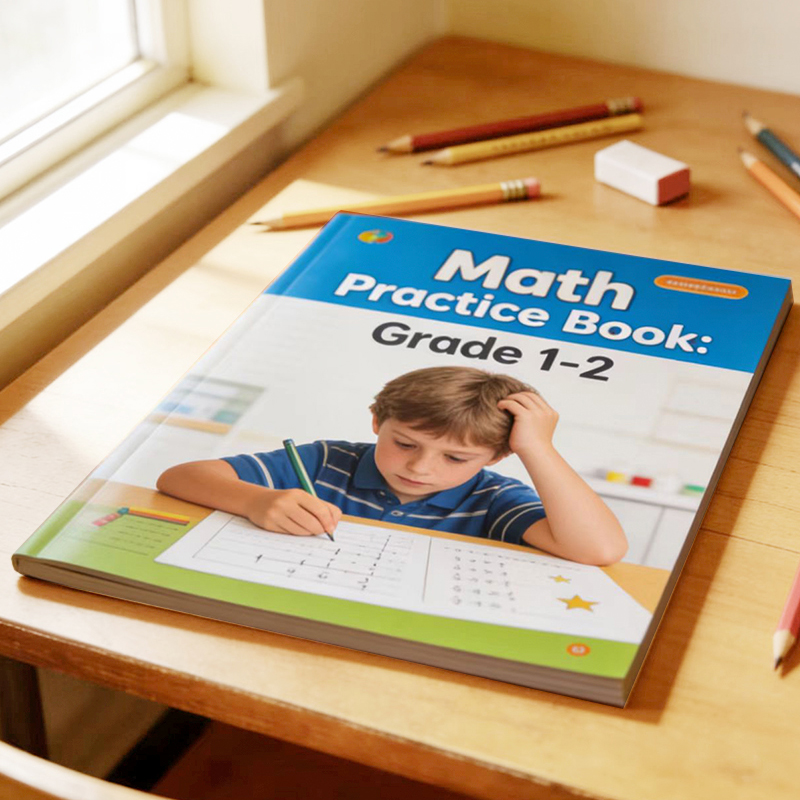
Paperback
-
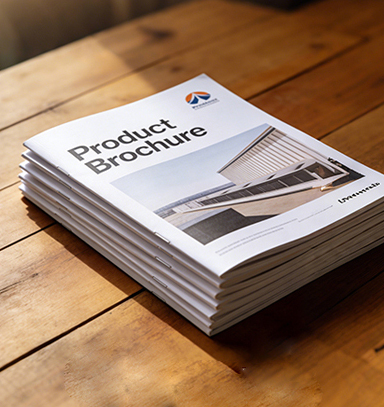
Cover: The cover of a paperback book is typically made of thicker coatedt paper, usually from 200 ~ 300 gsm.
-
Text Block: A variety of paper types can be chosen based on specific requirements. For text-heavy novels, uncoated paper is commonly used; for illustrated books with high color requirements, coated paper is recommended.
-
Binding: Perfect binding or sewn binding (for thicker books). It should be noted that for sewn binding method requires the number of pages to be a multiple of 4.
- Process: Multiple special processes can be selected, such as foil stamping, spot UV, embossing/debossing, matte/glossy lamination, etc.
Annie –
Printing my own work for the first time! Thanks for giving me a lot of useful suggestions.
Sue –
I make this for my daughter, and she loves it!